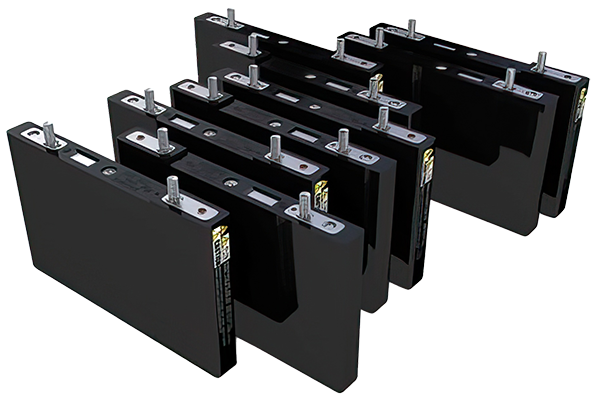
In recent years, the quest for improved energy storage solutions has caused a surge in demand for Hybrid SuperCapacitors (HSCs).
These devices combine aspects of lithium-ion technology with electric double-layer capacitor (EDLC) construction, resulting in improved operation. With their potential to serve as safe, reliable energy storage, HSCs have garnered significant adoption.
Musashi’s HSCs incorporate proprietary materials and processes to offer significantly enhanced performance that represents a substantial improvement over ultracapacitors/supercapacitors.
Our HSCs have a maximum working voltage of 3.8Vdc per cell, capacitance up to 3800 Farads, and provide up to 10 times the energy density of standard EDLC/SuperCapacitors in the same physical space. Musashi’s distinctive design delivers a durable, dependable, cost-effective energy storage solution for users.
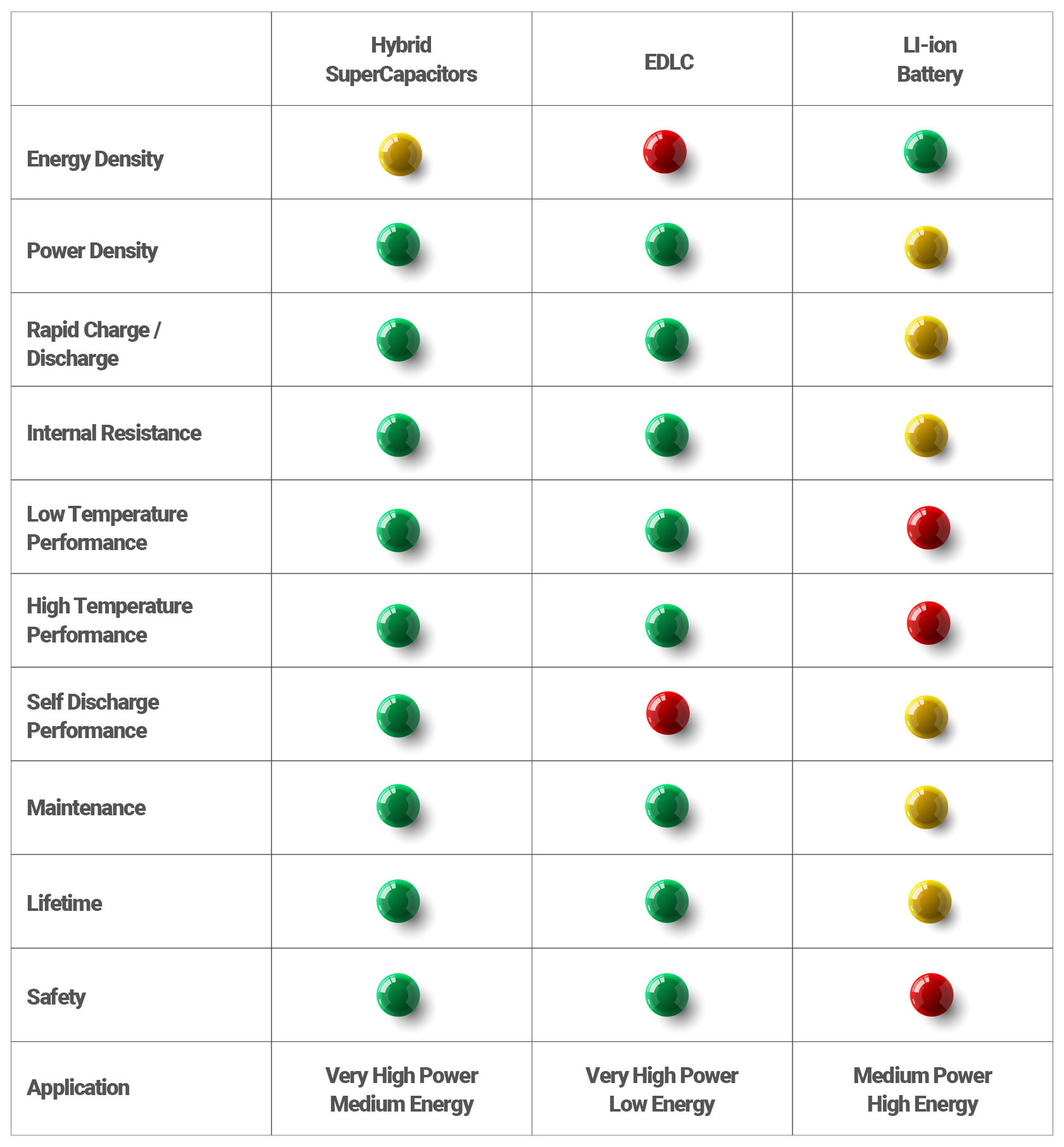
Comparison Chart for HybridSuperCapacitors, EDLCs and Lithium-Ion Batteries
Taking SuperCapacitors to the next level
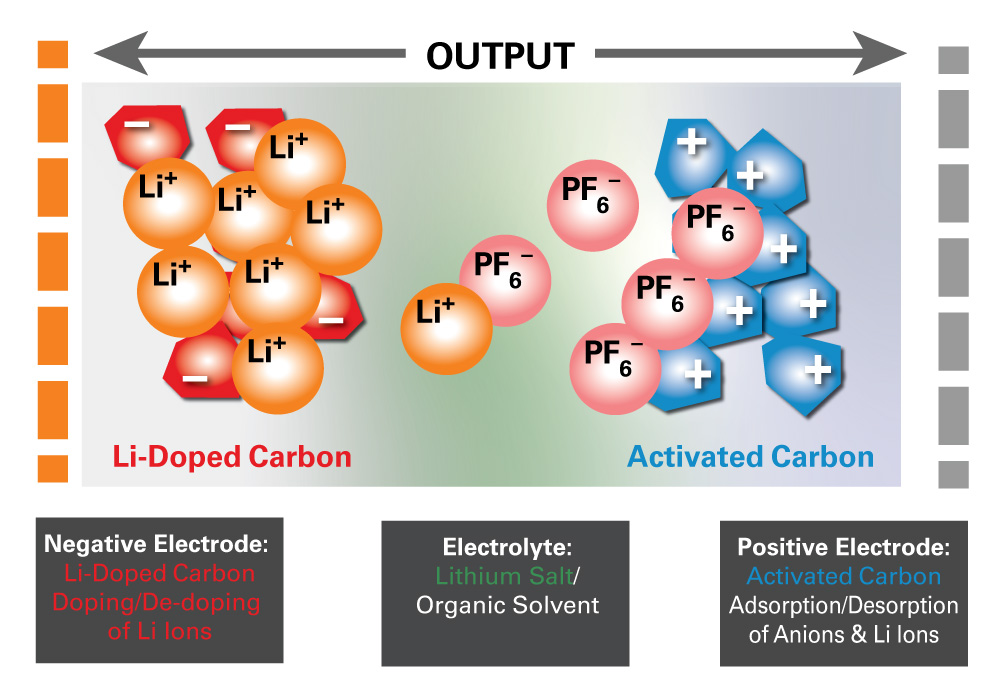
Our Hybrid SuperCapacitors combine the benefits and mitigate the shortcomings of EDLCs/supercapacitors and lithium-ion battery technology. HSC devices feature a lithium-doped graphite electrode, which replaces one of the carbon-based electrodes typically found in EDLCs and resembles that of a battery. These advantages create energy storage devices offering much greater energy densities than EDLCs with much longer lifecycles than lithium-ion batteries.
Our HSCs incorporate lithium but lack the metal oxides responsible for initiating thermal runaway, which can lead to failures and fires.
Additionally, the lithium-doped electrode has a lowered potential, which ensures the safe and efficient operation of the electrode within the system. This approach allows the electrode to operate at a maximum voltage level equivalent to that of a lithium-ion battery.
Superior performance for a variety of critical applications
Musashi’s Hybrid SuperCapacitors are becoming the preferred energy storage option for many applications due to their outstanding performance compared to lithium-ion batteries and standard supercapacitors. These hybrid devices offer:
Higher energy densities
Inherently safe (No possibility of thermal runaway)
Longer cycle lifetimes
Fast response to load fluctuations
Operates at higher working voltages and in extended temperature environments.